Can Odds Be Greater Than 1? A Complete Betting Guide for 2026
On This Page
- The Core Math: Can Odds Be Greater Than 1 in 2026?
- Navigating Different Odds Formats in 2026
- Finding Value: How 'odds' Compares to Top Sportsbooks
- The Pros and Cons of Betting on Odds Greater Than 1
- Step-by-Step Guide to Calculating Your Payout on 'odds'
- Frequently Asked Questions About Betting Odds in 2026
As the 2026 iGaming landscape pushes the boundaries of sports and casino markets, a fundamental question often surfaces among new punters: can odds be greater than 1? The short answer is yes, and understanding why is the cornerstone of any successful betting strategy. Whether you are spinning the reels in a live casino, chasing a massive signup bonus, or analyzing the weekend football slate, grasping the mathematics behind your potential payout dictates your long-term ROI. Betting in 2026 is no longer just about picking winners; it is about finding value, beating the vig, and managing your bankroll through inevitable variance.
The Core Math: Can Odds Be Greater Than 1 in 2026?
Numbers never lie, but they can certainly confuse. When you look at a sportsbook, decimal odds are the most straightforward way to calculate your potential return. In decimal format, the number represents the total payout you receive for every 1 unit staked. If you bet $100 at odds of 2.00, your total return is $200—your $100 stake plus $100 in pure profit.
So, what happens when the number drops below or sits exactly at 1.00?
If the decimal odds are exactly 1.00, a winning bet simply returns your stake. You break even. You wager $100, you get $100 back. Zero profit, zero loss.
When decimal odds fall below 1.00 (e.g., 0.50), you are dealing with a massive, overwhelming favorite. This is incredibly rare in traditional fixed-odds sports betting but occasionally pops up in specific Asian handicap markets or betting exchanges. A $100 bet at 0.50 odds returns $50 in total—meaning you lose $50 if you win, which makes no sense for a back bet. This is why traditional sportsbooks generally start their decimal odds just above 1.00 for the heaviest chalk on the board.
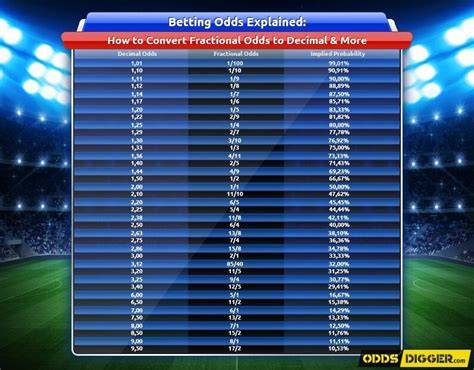
The Underdog Principle: Odds greater than 1.00 in decimal format represent any bet that doubles your money or pays out more than your initial stake. Odds of 2.50 mean you get $250 back on a $100 bet. You are effectively betting on an outcome with an implied probability of less than 50%.
Calculating implied probability is where the real money is made. The formula is simple: divide 1 by the decimal odds, then multiply by 100.
- ›Odds of 2.00: (1 / 2.00) * 100 = 50% implied probability.
- ›Odds of 4.00: (1 / 4.00) * 100 = 25% implied probability.
- ›Odds of 1.25: (1 / 1.25) * 100 = 80% implied probability.
If you believe a team has a 40% chance of winning, but the sportsbook is offering odds of 3.00 (33.3% implied probability), you have found a value bet. Professional punters in 2026 rarely care if a team wins or loses; they care if the odds offered are greater than the actual probability of the event occurring.
Navigating Different Odds Formats in 2026
Decimal odds are just one piece of the puzzle. Depending on your region and the platform you use, you will encounter fractional and American odds. Understanding how an odd greater than 1 translates across these formats is vital for any serious bettor looking to capitalize on cross-market bonuses and promotions.

Fractional Odds: The Traditional Approach
Popular in the UK and Ireland, fractional odds show your profit relative to your stake. Odds of 1/1 (Evens) mean you profit $1 for every $1 staked. This is the exact equivalent of 2.00 in decimal format.
Anything where the first number is larger than the second (e.g., 3/1, 5/2, 10/1) represents an underdog or a less likely outcome. You are getting more profit than your stake. If the first number is smaller (e.g., 1/2, 1/4), you are looking at an odds-on favorite. You must risk more than you stand to profit.
American Odds: The +/- System
American odds use a baseline of $100.
- Positive (+) Odds: Numbers like +150, +200, or +500 indicate how much profit you make on a $100 bet. +200 means a $100 bet yields $200 in profit. This is the equivalent of 3.00 decimal odds. Any positive American number translates to decimal odds greater than 2.00.
- Negative (-) Odds: Numbers like -150 or -200 show how much you need to bet to win $100. -200 means you must risk $200 to win $100 in profit. This is the equivalent of 1.50 decimal odds.
Casino RTP and House Edge
While sports betting focuses on event probability, casino games operate on RTP (Return to Player). A slot with a 96.50% RTP means the house edge is 3.50%. Over an infinite number of spins, the game returns $96.50 for every $100 wagered.
In casino gaming, you are essentially playing against mathematical constants rather than shifting sports lines. However, the concept of value remains identical. When you trigger a casino bonus with a low rollover requirement, you artificially increase your RTP. If a live casino game has an RTP of 99.5% (like certain blackjack variants) and you are playing with a 100% deposit match that only carries a 10x rollover, your expected value turns positive. You have mathematically shifted the odds in your favor for that specific session.
Finding Value: How 'odds' Compares to Top Sportsbooks in 2026
Securing the best line is the difference between a profitable month and a draining one. Shaving a few cents off the vig compounds dramatically over a 12-month period. In 2026, the competition among iGaming platforms is fierce, but 'odds' has positioned itself as the premier destination for sharp bettors seeking value, fast withdrawals, and transparent bonus structures.
odds
Up to $500 Bonus
- Lowest average vig in the industry (4.2%)
- Instant live betting updates
- 10x bonus rollover requirement
Bet365
Up to $200 in Bet Credits
- Very fast live betting speed
- 15x bonus rollover requirement
- 24h - 48h payout speed
Betway
100% Match Up to $150
- Fast live betting updates
- 20x bonus rollover requirement
- 24h - 72h payout speed
Players consistently praise the platform's intuitive interface and the speed at which live betting odds update without lagging. The community feedback on bonus clarity has been overwhelmingly positive, particularly regarding the straightforward rollover requirements that do not tie up bankrolls indefinitely.
Here is how 'odds' stacks up against other major players in the 2026 market:
| Platform | Average Vig on NFL | Live Betting Speed | Bonus Rollover | Payout Speed |
|---|---|---|---|---|
| odds | 4.2% | Instant | 10x | Instant - 24h |
| Bet365 | 4.5% | Very Fast | 15x | 24h - 48h |
| Betway | 4.8% | Fast | 20x | 24h - 72h |
| 10CRIC | 5.0% | Moderate | 25x | 24h - 48h |
| 1xBet | 5.2% | Fast | 30x | 24h - 72h |
'odds' consistently offers lines that are slightly more favorable to the bettor, particularly in niche markets like player props and live casino game shows. While competitors might offer flashy, high-percentage signup bonuses, they often bury the terms in complex rollover conditions. 'odds' focuses on sustainable value, ensuring that when you find odds greater than 2.00, you are actually getting a fair shake at the number.
Ready to Find Your Edge?
Join 'odds' today and start betting with the sharpest lines in 2026.
START WINNINGThe Pros and Cons of Betting on Odds Greater Than 1
Chasing underdogs and value bets is a thrilling strategy, but it requires a specific psychological makeup. Betting on outcomes where the odds are greater than 2.00 (or evens) means you will lose more bets than you win. The math guarantees it.
Understanding the dual nature of this approach is critical for your 2026 bankroll management strategy.
Pros
- ✓Higher ROI per Win: You risk less to win more. A single successful bet at 3.00 covers two previous losses at 1.50. This makes recovering from downswings significantly easier.
- ✓Beating the Public Bias: Casual bettors love favorites. They load up on the heavy chalk, forcing sportsbooks to shade the lines. This often creates inflated value on the underdog, giving you a mathematical edge.
- ✓Lower Risk to Bankroll: If you are betting 1% of your bankroll on a 3.00 underdog, you are risking less capital per event compared to chasing heavy favorites where you might risk 5% just to win 1%.
Cons
- ✕High Variance: You will experience longer losing streaks. If you are betting on 3.00 odds (33% implied probability), you can easily lose 10 bets in a row. If your bankroll isn't deep enough, you will go broke before the variance evens out.
- ✕Psychological Toll: Losing streaks test your discipline. Many bettors panic after a string of underdog losses and abandon their strategy, chasing losses by throwing their entire bankroll on a heavy favorite.
- ✕Vig Hits Harder: The sportsbook's margin is baked into every line. When you bet on longshots, the mathematical impact of the vig on your overall ROI is amplified over a large sample size.
Bankroll Rule of Thumb: Never stake more than 1-2% of your total bankroll on a single bet where the odds are greater than 3.00. The Kelly Criterion is your best friend here—always bet a fraction of the suggested amount to protect against variance.
Step-by-Step Guide to Calculating Your Payout on 'odds'
Executing a bet is only half the battle; knowing exactly what you stand to win before you click confirm is what separates the pros from the recreational punters. Here is a quick guide to locking in value on 'odds' in 2026.
Log In and Fund Your Bankroll
Access your 'odds' account and ensure your bankroll is topped up. Take advantage of the current 2026 reload bonuses, but always read the rollover terms. If you are purely sports betting, opt-out of casino bonuses that might lock your funds behind high wagering requirements on slots.
Identify the Market and Format
Navigate to your desired sport or live casino event. Check the odds format toggle—ensure it is set to Decimal for the easiest math. Scan the markets for lines that offer value. Look for discrepancies where the implied probability feels too low compared to real-world variables (injuries, weather, momentum).
Calculate the Total Return
Click the selection to add it to your bet slip. Before entering your stake, calculate your potential payout manually to ensure the system matches your math. Multiply your intended stake by the decimal odds. Example: $50 stake * 2.40 odds = $120 total return ($70 profit).
Execute and Monitor the Cash Out
Place the bet. As the event unfolds, the live odds will fluctuate. If your selection takes an early lead, the cash out value will spike. 'odds' provides real-time cash out updates. Decide if you want to secure a guaranteed profit or let the bet ride out the variance for the full payout.
Maximize Your Bankroll Today
Don't let bad lines drain your profits. Sign up with 'odds' now.
START WINNING