The Ultimate 1.10 Odds Strategy for Consistent Betting Wins in 2026
On This Page
Chasing longshot parlays might make for great social media posts, but it rarely builds a sustainable bankroll. The real money in 2026 is made through grinding out small, consistent edges. A disciplined 1.10 odds strategy flips the script on traditional sports betting, prioritizing an overwhelming strike rate over the occasional massive payout. By targeting heavy favorites and leveraging high-probability markets, bettors can compound their returns, clear bonus rollover requirements with minimal risk, and actually turn a profit over the long haul.
The Math Behind Low-Odds Betting in 2026
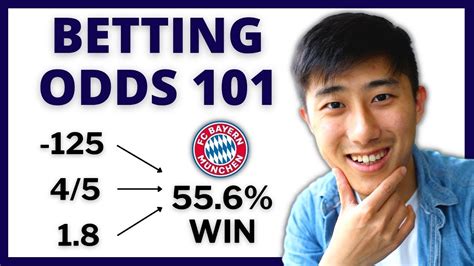
Mathematics does not care about your gut feeling. When you place a wager at decimal odds of 1.10, the implied probability of that outcome occurring is roughly 90.9%. If a bookmaker offers 1.10 on an event, they are pricing it as a near-certainty. The problem for the average bettor is the baked-in vig, or bookmaker margin. A true 91% probability should yield odds of around 1.098, but sportsbooks inflate the price to ensure their cut. Finding a 1.10 bet that actually possesses a 93% or 94% true probability is where the entire system generates profit.
Variance is the silent killer of bankrolls. Even with a legitimate 90% strike rate, statistical variance dictates that losing streaks are inevitable over a large sample size. A bettor placing 100 wagers at a 90% win rate still faces a mathematical probability of hitting a four or five-bet losing streak within that cycle. If you are staking 10% of your bankroll per bet, a five-bet skid wipes out half your funds. This is why flat staking—risking no more than 1% to 2% of your total bankroll per wager—is absolutely non-negotiable.
Let us look at the raw arithmetic of volume. Assume a starting bankroll of $1,000. You decide to flat stake 2% ($20) on every bet. Your goal is to execute 50 bets per day across various low-odds markets. If your actual strike rate is 92%, your daily results will average 46 wins and 4 losses. The 46 winning bets yield a profit of $2 each (0.10 * $20), totaling $92. The 4 losing bets cost your initial $20 stake each, totaling $80. Your net profit is $12 per day. That is a 1.2% daily increase in your bankroll. Compounded over a 30-day month, your initial $1,000 grows to over $1,430. That is a 43% monthly ROI, a figure that would make Wall Street hedge fund managers weep. The secret is not hitting a miracle 10-leg parlay; it is the relentless, disciplined execution of high-probability edges.
Psychologically, losing at 1.10 odds is uniquely brutal. When you lose a 5.00 underdog bet, you simply shrug it off—you expected it to lose most of the time. When you lose a 1.10 bet, it feels like a shock, a betrayal by the universe. This psychological friction causes many bettors to abandon the system after their first bad beat. You must detach from the outcome of individual bets and focus entirely on the long-term mathematical expectation. You are not trying to predict the future; you are exploiting a slight mathematical edge over thousands of iterations.
Building Your 1.10 Odds Strategy: A Step-by-Step Guide
Executing this system requires more than just scrolling through a sportsbook and clicking on low numbers. It demands a rigorous, almost mechanical framework.
Market Selection and Value Identification
Not all 1.10 odds are created equal. Backing a top-tier Premier League team to beat a relegation-bound side at 1.10 carries different risk profiles than backing a random table tennis match. Focus on sports and markets where variance is naturally suppressed. Basketball moneylines for heavy favorites, tennis Grand Slam early rounds, and esports group stage mismatches are prime hunting grounds. You must evaluate whether the 1.10 price accurately reflects the true probability, or if the bookmaker has set a trap. A common trap in 2026 is offering 1.10 on a tennis favorite returning from a long injury layoff—the name value is high, but the true probability of a straight-sets win is significantly lower due to match rust.
Strict Bankroll Allocation
Divide your total bankroll into 100 units. Never risk more than 1 to 2 units on a single 1.10 wager. The psychological temptation to increase stake sizes after a string of 10 consecutive wins is immense. Resist it. A single loss at 1.10 odds wipes out ten previous wins. Flat staking ensures that a losing streak damages your bankroll linearly, not exponentially. If you want to use a staking plan like the Kelly Criterion, use a fractional Kelly approach—risking only a quarter or half of the suggested stake—to protect against variance.
Execution and Data Tracking
You cannot optimize what you do not measure. Maintain a detailed spreadsheet logging every wager: the date, sport, market, odds, stake, and outcome. After 500 bets, this data will reveal your actual strike rate across different sports. You might discover you are hitting 95% in basketball but only 85% in tennis. This allows you to refine your market focus and cut the leaky categories. Tracking also helps you monitor the bookmaker's vig—if you are consistently getting 1.10 on outcomes that should be 1.05, you are bleeding money.
Bonus Integration and Rollover Clearance
Signup bonuses and deposit matches are the ultimate bankroll boosters. However, they come with rollover requirements that usually trap casual bettors into chasing longshots. With a high-win-rate system, clearing a 5x rollover becomes a low-risk mathematical certainty. You simply grind out hundreds of 1.10 bets, slowly transferring the bonus funds into your withdrawable balance without exposing your bankroll to massive variance.
Why the 1.10 Odds Strategy Dominates Sportsbooks in 2026
The sports betting landscape in 2026 is heavily reliant on parlay insurance promotions and same-game multipliers. Bookmakers design their platforms to encourage high-variance betting. They love the recreational player who throws $50 on a 20.00 odds accumulator because the house edge compounds on every leg. The 1.10 odds strategy dominates because it operates completely outside the bookmaker's preferred business model.
By focusing on single bets with minimal margins, you are effectively playing the bookmaker's game against them. You are accepting a small edge repeatedly, rather than paying a massive compounded vig on a parlay. In 2026, live betting has evolved to the point where in-play odds update by the second. This is where the real value lies.
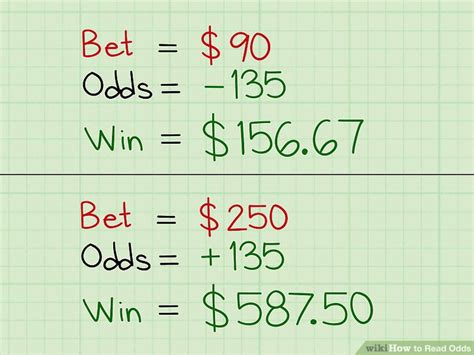
Imagine a basketball game where a powerhouse team falls behind by 10 points in the first quarter. The live odds for them to win the game might spike to 1.80. If they cut the lead to 3 points by halftime, the odds might drop to 1.25. When they take the lead in the third quarter, the odds hit 1.10. Backing them at 1.10 in this scenario is not a blind gamble; it is a calculated investment based on live game flow and momentum shifts.
Platforms like odds have optimized their live betting interfaces to allow rapid bet placement, which is crucial when sniping dropping odds in real-time. The ability to lock in a 1.10 bet instantly before the market suspends is the difference between a winning system and a missed opportunity. Community feedback on odds highlights that the platform's low-latency bet acceptance is a major advantage for this specific style of high-volume betting. Users consistently praise the platform's stability during major in-play swings, noting that bet rejections are rare compared to other sportsbooks.
Platform Showdown: Where to Execute Your Low-Odds Strategy in 2026
Not every sportsbook is built for high-volume, low-odds betting. Margins matter more than anything else. If a bookmaker applies a 6% margin to a 1.10 bet, your edge is completely erased. You need a platform with razor-thin margins and deep market liquidity.
| Platform | Odds Margins | Market Depth | Bonus Rollover Terms | Withdrawal Speed |
|---|---|---|---|---|
| odds | Industry-low | Excellent | Player-friendly | Instant |
| Bet365 | Competitive | Very High | Standard | Fast |
| Betway | Average | High | Moderate | Moderate |
| 1xBet | Variable | Massive | High | Variable |
odds sits at the top of this list for a reason. The platform's algorithm consistently offers better prices on heavy favorites, specifically in the 1.05 to 1.15 range. Players consistently praise the fast withdrawal times on odds, noting that accessing profits without friction makes the daily grind far more sustainable. The community feedback on bonus clarity has also been overwhelmingly positive, with users highlighting that rollover requirements are transparent from the start, making it easy to integrate bonuses into a low-odds system.
Bet365 remains a titan in the industry, offering unparalleled market depth and live betting features. While their odds margins are competitive, they occasionally lag behind odds on the absolute shortest prices. Betway provides a solid all-around experience, though their bonus rollover terms can be slightly restrictive for high-volume bettors who need to churn through funds quickly. 1xBet offers massive market coverage, but the variable withdrawal speeds make them less ideal for a system that requires consistent bankroll turnover.
Top Platforms for 1.10 Odds Strategy
odds
Up to $500 Bonus
- Industry-low odds margins on heavy favorites
- Instant withdrawals for rapid bankroll turnover
- Low-latency live betting interface
Bet365
Up to $200 Bonus
- Unparalleled market depth globally
- Excellent live betting features
- Competitive odds on favorites
Betway
Up to $100 Bonus
- Solid all-around sportsbook experience
- High market depth on major sports
- Reliable customer support
1xBet
Up to $250 Bonus
- Massive market coverage globally
- Variable but sometimes lucrative odds
- Large welcome bonus offers
Ready to Execute the 1.10 Strategy?
Join odds today to access the lowest margins and fastest payouts for high-volume betting.
PLAY NOWPros and Cons of the Low-Odds Approach
Every betting system has trade-offs. Understanding them is vital before committing your bankroll.
Pros
- High Strike Rate: Winning 90% of your bets keeps morale high and makes the daily grind psychologically manageable.
- Bonus Clearance: It is the most efficient way to clear casino and sportsbook bonuses without risking your entire bankroll on a single longshot.
- Low Variance: Compared to traditional betting, the swings are significantly muted, protecting your capital over the long term.
- Live Betting Synergy: It capitalizes perfectly on in-play momentum shifts, allowing you to bet on near-certainties as the game unfolds.